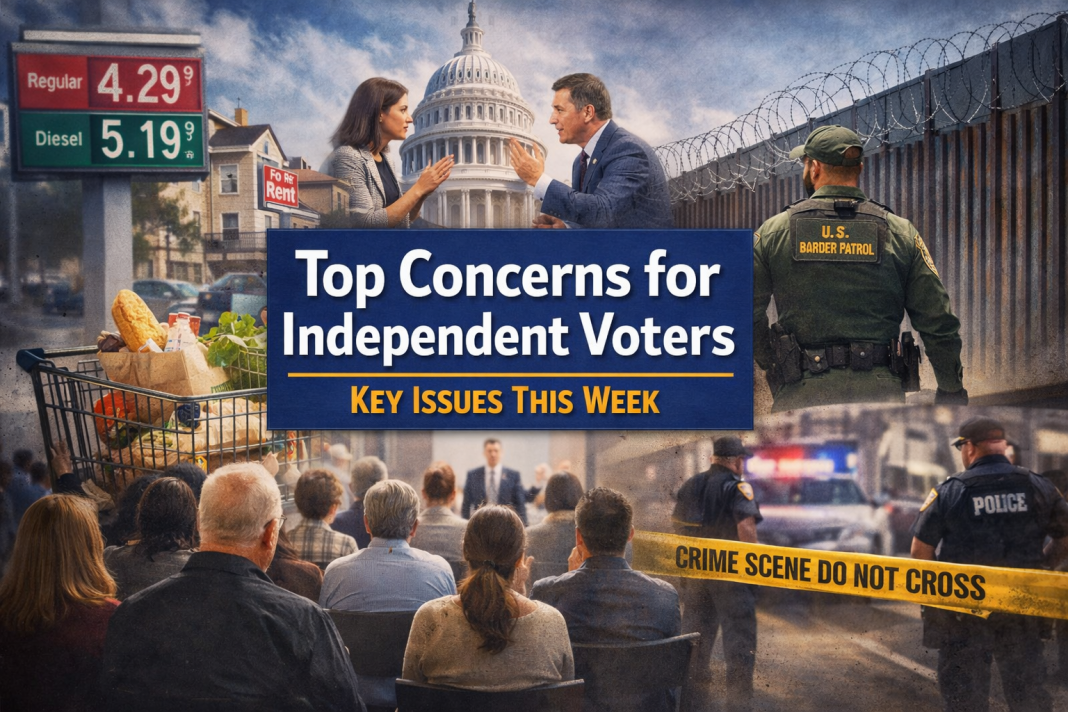

Washington, D.C. — With the 2026 midterm elections drawing closer, independent voters—now the fastest-growing share of the electorate—are sharpening their focus on pragmatic, results-oriented issues rather than party ideology. Polling trends, voter focus groups, and congressional activity point to five concerns dominating independent voter attention this week.
1. Cost of Living and Household Affordability
More than any other issue, independents are focused on everyday expenses. While economic indicators show mixed signals, many voters say relief has not reached their household budgets.
Key pressures include:
- Grocery and fuel prices
- Housing and rent affordability
- Insurance and healthcare premiums
Independents tend to blame both parties, expressing frustration with political messaging that does not translate into tangible cost reductions.
2. Government Dysfunction and Partisan Gridlock
Independent voters consistently rank political dysfunction as a top concern. This week, ongoing budget negotiations and partisan standoffs reinforce perceptions that Washington prioritizes party conflict over problem-solving.
Common frustrations include:
- Shutdown threats and continuing resolutions
- Delays in passing bipartisan legislation
- Constant investigations with limited outcomes
Many independents say they want leaders who can “govern, not grandstand.”
3. Immigration Control with Humane Enforcement
Independents occupy a middle ground on immigration, supporting stronger border enforcement while opposing policies they view as extreme or inhumane.
This week’s concerns center on:
- Border security effectiveness
- Asylum system backlogs
- Community and public safety impacts
Rather than ideological solutions, independents favor practical reforms that combine enforcement, legal pathways, and faster case processing.
4. Trust in Institutions and Political Accountability
Confidence in major institutions—including Congress, federal agencies, and even elections—remains fragile among independent voters.
Top accountability concerns include:
- Ethical standards for elected officials
- Transparency in federal spending
- Insider trading and conflicts of interest
This skepticism often translates into late decision-making at the ballot box, making independents a decisive swing bloc.
5. Public Safety and Social Stability
Independents continue to express concern about crime and social disorder, particularly in metropolitan and suburban areas.
Key worries include:
- Violent crime and repeat offenders
- Drug abuse and homelessness
- Uneven enforcement of laws
Independents generally resist partisan crime narratives, instead favoring policies that balance enforcement, prevention, and rehabilitation.
Political Outlook
Unlike party-aligned voters, independents remain highly fluid heading into 2026. Their concerns this week suggest a desire for stability, affordability, and competence—qualities they believe are in short supply in national politics. Candidates who can credibly demonstrate bipartisan effectiveness may gain a decisive edge with this group.
Sources
- Pew Research Center, Independent Voter Attitudes and Trust in Government
- Gallup, Most Important Problem and Confidence in Institutions tracking
- Associated Press and Reuters congressional reporting (February 2026)
- Congressional Budget Office (CBO), Economic Outlook
- Public voter focus group summaries and national issue polling