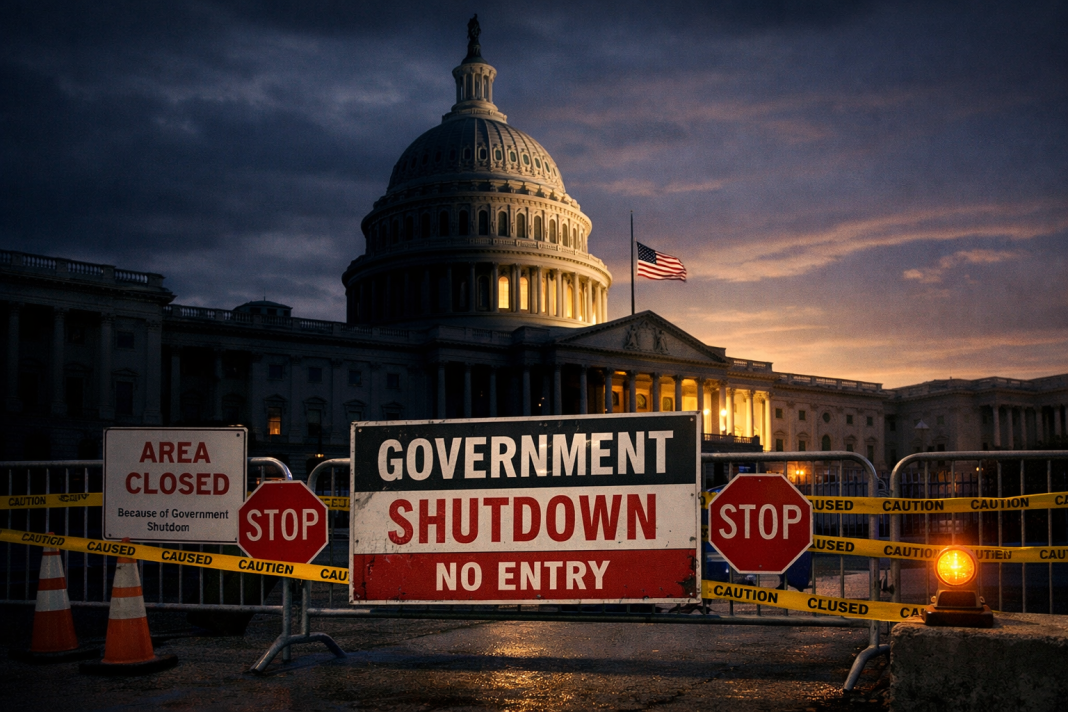

A partial U.S. federal government shutdown remains in effect after funding lapsed on January 31, 2026 when Congress failed to enact the final appropriations measures needed to finance certain departments and agencies of the federal government. (Wikipedia)
Despite last-minute action in the Senate earlier in the week to approve a piecemeal spending package, political disagreements — especially over Department of Homeland Security (DHS) funding and immigration policy reforms — have prevented the House of Representatives from passing the full set of bills needed to fully reopen the government. (Reuters)
How the Shutdown Started
Under federal budget rules, the government must pass a full set of 12 appropriations bills — or a continuing resolution to extend existing funding — before the new fiscal year begins. For fiscal year 2026, that deadline was January 30, 2026. (Brookings)
In late January, Senate leaders reached a compromise that separated DHS funding from other federal agency funding. The Senate passed this divided package — funding most departments for the year while extending DHS for two weeks — but the House delayed action until early February. Because the House did not pass the measure before funds expired at midnight January 31, many federal programs have entered shutdown status. (Wikipedia)
Political Stalemate and Core Disputes
Immigration and DHS Funding
The central sticking point involves immigration enforcement policy. Democrats have demanded significant reforms to DHS operations, including:
- Mandatory body cameras for immigration agents
- Requiring judicial warrants for certain searches
- Ending the use of masks and roving patrols by agents
These demands intensified after recent deaths during a federal enforcement operation in Minneapolis. Although President Trump and Speaker Mike Johnson have expressed support for a temporary DHS funding extension, Democrats have pushed back, refusing to expedite a vote without policy concessions. (AP News)
Internal GOP Tensions
House Speaker Mike Johnson has sought to pass the Senate’s divided spending package while managing a narrow Republican majority. Some House Republicans want broader or different provisions, while others are cautious about negotiating with Democrats on immigration policy. This has made securing the necessary votes more complex than anticipated. (Wall Street Journal)
Who Is Affected — And Who Isn’t
Federal Agencies & Workers
- Many federal agencies are operating under contingency plans or have suspended non-essential operations.
- Some federal employees are furloughed (temporarily laid off), while “excepted” employees continue working, often without pay until funding is restored. (Social Security)
Social Security and Benefits
Programs like Social Security, Medicare, and Supplemental Security Income (SSI) continue to pay beneficiaries on schedule. However, certain in-office services are limited, and some administrative services (like replacements for Medicare cards) may be restricted. (Social Security)
Public Services
Services such as national parks and museums can see closures or reduced operations depending on staffing and funding status. (Representative Nancy Pelosi)
Economic and Social Impacts
Shutdowns slow economic activity and disrupt planning for individuals and businesses that rely on federal services. Past shutdowns — including the record-long closure in late 2025 — have shown effects such as delayed regulatory reviews, slowed federal contract processing, and furlough-related hardships for workers. (Brookings)
Historical shutdowns also show that households depending on federal services or benefits can experience frustration and delays, though many mandatory benefit programs continue. (Social Security)
Outlook — When Might It End?
House Speaker Johnson has expressed confidence that funding can be restored by Tuesday, February 3, 2026, if the necessary votes are secured. However, as of today’s reporting, a vote to end the shutdown has not yet been held, and partisan divisions remain sharp. (Reuters)
What happens next will depend on whether lawmakers can bridge differences over DHS policy and broader spending priorities — a negotiation that could shape not only this shutdown’s end but longer-term fiscal and immigration policy debates in the months ahead.
Why It Matters to Americans
A government shutdown — even a partial one — affects millions:
- Federal employees and contractors may lose income temporarily.
- Small businesses working with federal agencies face delays in permits and contracts.
- Public services can be curtailed or slowed.
- Confidence in government stability can waver, potentially affecting markets and long-term planning.
As Congress returns to the Capitol this week, the nation watches to see if compromise or continued stalemate prevails.