
As the U.S. prepares for the 2026 midterm elections, recent special election results have heightened national attention on the balance of power in Congress and the competitive landscape ahead of November 3, 2026.
Texas Special Election Shifts House Balance
In a major development over the weekend, Democrat Christian Menefee won a special election in Texas’s 18th Congressional District, narrowing the Republican Party’s slim majority in the U.S. House of Representatives.
- Menefee’s victory follows a runoff after the seat was left vacant for nearly a year due to the death of Rep. Sylvester Turner.
- The result brings the current tally closer, tightening the GOP’s hold as Republicans hold a narrow majority heading into the midterms.
Political analysts view the outcome as more than local: it signals potential Democratic momentum, especially in urban and historically Democratic districts. At the same time, it adds pressure on Republican leadership to defend vulnerable seats in the upcoming general election.
State-Level Contests and Electoral Momentum
Beyond Texas, other races are also capturing voter attention:
- New Jersey’s 11th Congressional District has begun early voting in its special election primary, with candidates vying to succeed the departing representative.
- In the Texas state legislature, Democrat Taylor Rehmet flipped a traditionally Republican state Senate seat that Donald Trump won decisively in 2024 — a result seen as a warning sign for future GOP prospects.
These races underscore how localized contests can have national implications, shaping both party morale and strategic planning as campaigns move deeper into 2026.
Looking Ahead to November 3, 2026
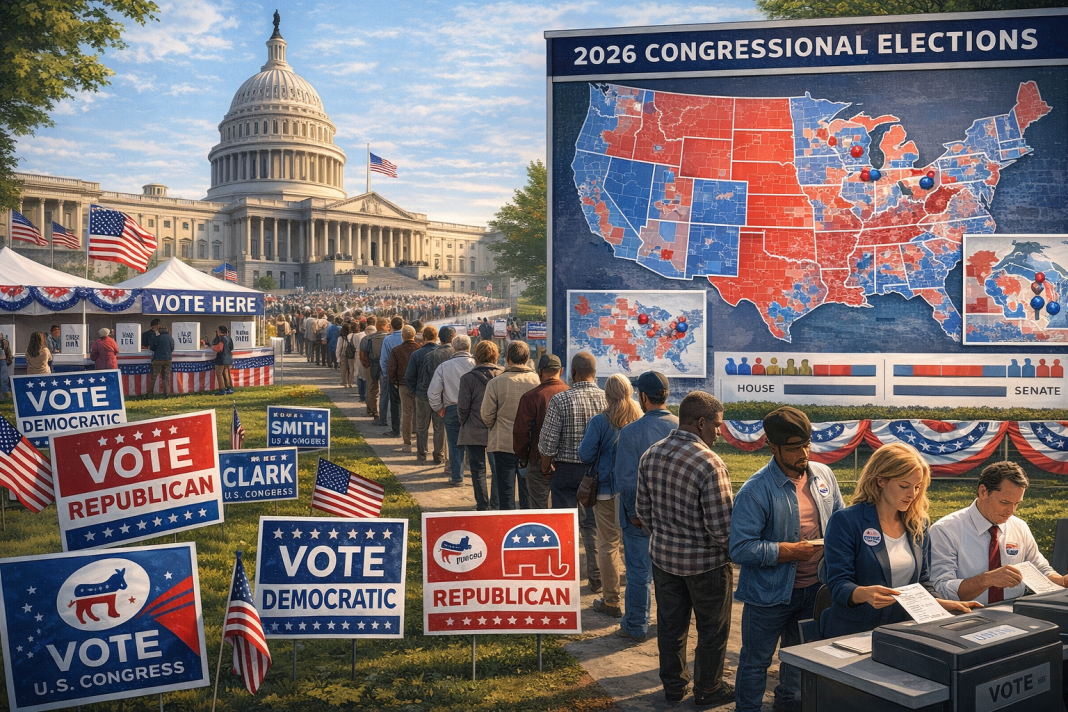
The general congressional elections will take place on November 3, 2026, when all 435 U.S. House seats and a portion of the U.S. Senate will be contested.
- Republicans currently hold a narrow control of the House.
- Democrats are targeting key swing districts to flip the chamber or make significant gains. Strategic maps identify numerous winnable seats where margins were tight in previous elections.
Campaigns are already underway nationwide, with primary deadlines and candidate filings shaping a highly competitive environment. Several other special elections are scheduled this year — including Georgia’s 14th District — which could further reshape the makeup of Congress before the general election.
Why This Matters
Control of Congress will determine legislative power on key issues such as federal spending, immigration policy, healthcare, and oversight of the executive branch. A shift in either direction could influence national policy during the last two years of the current presidential term.