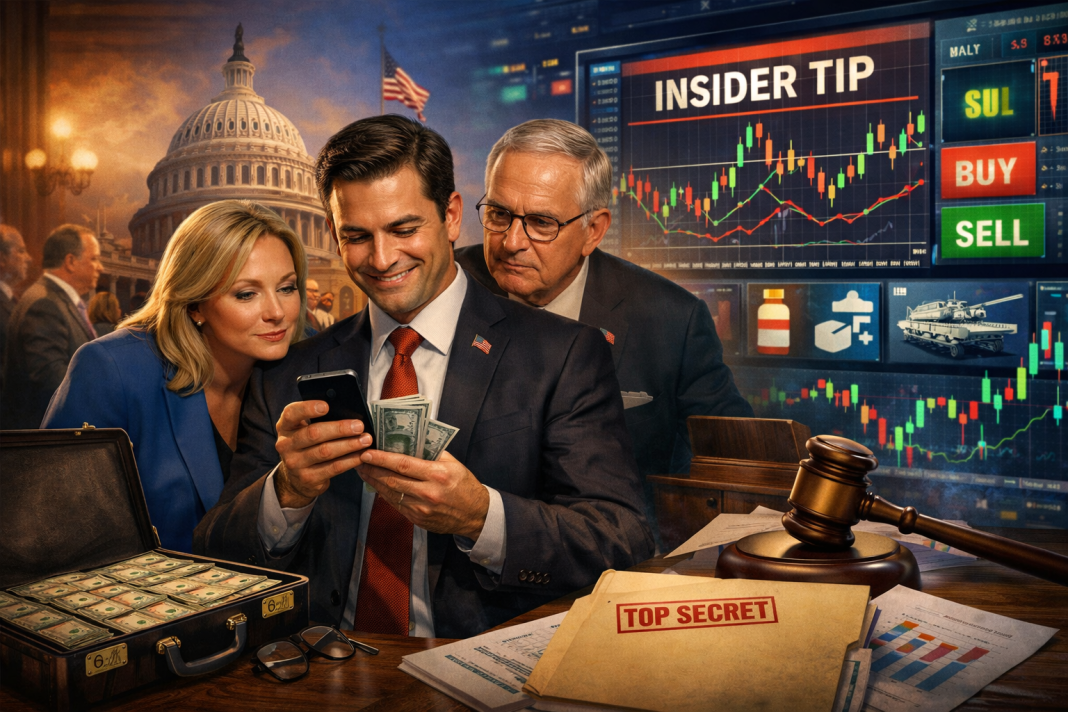

Few issues erode public confidence in government as quickly as the perception that elected officials are profiting from inside information. Congressional insider trading sits at the uncomfortable intersection of political power and financial markets—legal in narrow technical ways, ethically murky in practice, and politically explosive in public opinion.
What Is Congressional Insider Trading?
Insider trading, in the classic sense, involves buying or selling securities based on material, non-public information. For most Americans, that’s illegal. For members of United States Congress, the rules are more complicated.
Lawmakers routinely receive confidential briefings on:
- National security threats
- Pending legislation and regulation
- Economic interventions and stimulus
- Corporate investigations and enforcement actions
The concern is straightforward: if a member of Congress trades stocks based on this privileged information—or even appears to—public trust takes a hit, regardless of whether the action technically violates the law.
The STOCK Act: A Partial Fix
In 2012, Congress passed the Stop Trading on Congressional Knowledge (STOCK) Act, which clarified that members of Congress and their staff are not exempt from insider trading laws and required public disclosure of most stock trades within a set time period.
On paper, this sounded like reform. In reality, enforcement has been weak.
Key limitations include:
- Delayed disclosures that reduce transparency in real time
- Minimal penalties for late or inaccurate filings
- No outright ban on owning or trading individual stocks
As a result, lawmakers can still legally trade stocks in industries they oversee—as long as they file the paperwork.
Patterns That Raise Eyebrows
Investigative journalists and watchdog groups have documented repeated patterns that fuel skepticism:
- Lawmakers buying or selling stocks just before major legislative or regulatory announcements
- Concentrated trading in sectors directly tied to committee assignments
- Significant returns that outperform market averages
While correlation does not prove insider trading, the optics are damaging—especially when everyday Americans face strict insider trading enforcement by the Securities and Exchange Commission.
Why This Matters to Voters
At its core, the issue is not just legality—it’s fairness.
Members of Congress write laws that affect:
- Healthcare companies
- Defense contractors
- Energy and technology firms
- Banks and financial institutions
When lawmakers can personally profit from decisions they help shape, it creates a conflict of interest, even if no law is technically broken. This feeds a broader narrative that Washington plays by a different set of rules than the public.
Polls consistently show overwhelming bipartisan support for stricter limits—or outright bans—on congressional stock trading.
Proposed Reforms on the Table
In recent years, lawmakers from both parties have introduced proposals aimed at restoring trust. Common reform ideas include:
1. Full Ban on Individual Stock Trading
Members of Congress would be prohibited from owning or trading individual stocks while in office, instead using:
- Broad index funds
- Blind trusts
2. Real-Time or Near-Real-Time Disclosure
Trade disclosures would be reported within days—or hours—rather than weeks.
3. Stronger Penalties
Meaningful fines, profit forfeiture, or ethics sanctions for violations.
4. Independent Enforcement
Removing enforcement authority from internal congressional ethics committees and assigning it to an outside body.
Despite public support, many of these reforms stall once they reach leadership votes.
The Political Reality
Congress faces a credibility problem on this issue largely because it is self-regulating. Any meaningful reform requires lawmakers to voluntarily restrict their own financial freedom—a tough sell in a polarized institution.
Critics argue this reluctance reinforces the idea of a “political class” insulated from the consequences of its actions. Supporters of reform counter that without strong guardrails, even ethical lawmakers are vulnerable to suspicion.
The Bottom Line
Congressional insider trading is less about dramatic courtroom convictions and more about trust. Even when trades are legal, they can undermine confidence in democratic institutions if Americans believe lawmakers are leveraging public service for private gain.
As economic pressures grow and market volatility increases, scrutiny of congressional trading is unlikely to fade. Whether Congress chooses transparency and restraint—or continues with incremental reform—will shape how seriously voters take its commitment to ethical governance.
In a system built on representation, the question remains: who is Congress really trading for—the public, or itself?